
Sample assessment · large language model
Foundation model fairness assessment
A complete audit of a language model, from output validation and counterfactual prompt probes to the EU AI Act model card.
Overview
This walkthrough demonstrates a complete fairness audit of a foundation model (LLM) deployment where training data is not available. Unlike the credit scoring case, this audit operates entirely at the output level — evaluating the model as a black box through systematic prompt testing, output analysis, and regression-based fairness metrics.
By following this guide, you will produce: an output-level data validation, auto-discovery bias scan, prompt fairness probes, output calibration analysis, comprehensive fairness metrics with confidence intervals, regression fairness evaluation, CI/CD gate decisions, monitoring dashboards, multi-tier reports, and an EU AI Act–compliant model card for a GPAI-based high-risk system — all backed by 23 production-grade SVG artifacts.
The dataset, the model and every number in the Findings boxes below are invented to show the shape of a complete audit. No file named here ships with the library, so the walkthrough is not reproducible end to end as written, and nothing on this page is a measurement of a real system. The code is real and the call signatures are checked against the library; the results are illustration.
The Scenario
LLM-Powered Resume Screening — EU AI Act High-Risk System
A recruitment platform deploys a foundation model API to screen and rank job applicants. The LLM reads each resume, produces a suitability score (0–100) and a narrative summary. Under the EU AI Act (Annex III, Section 4a), AI systems used in recruitment and selection of workers are classified as high-risk AI. Additionally, the use of a GPAI model triggers Article 51–56 obligations for the GPAI provider, while the deployer retains full responsibility for the downstream application.
import pandas as pd
import numpy as np

# ── Load the evaluation dataset ──
# Each resume was scored by the LLM API; we collected outputs + demographic metadata
df = pd.read_csv("resume_screening_outputs.csv")

# Columns: applicant_id, llm_score (0-100), llm_decision (shortlisted/rejected),
#           gender, ethnicity, age_group, job_category, years_experience, ...

PROTECTED   = ["gender", "ethnicity", "age_group"]
SCORE_COL   = "llm_score"         # Continuous output (0-100)
OUTCOME_COL = "llm_decision"      # Binary: shortlisted=1, rejected=0
FEATURES    = [c for c in df.columns if c not in PROTECTED + [OUTCOME_COL, SCORE_COL, "applicant_id"]]

# Convert binary decision
df["shortlisted"] = (df[OUTCOME_COL] == "shortlisted").astype(int)

# Extract subsets for analysis
y_true     = df["shortlisted"]       # LLM decisions as binary labels
y_scores   = df[SCORE_COL] / 100.0   # Normalize to [0, 1] for probability-like analysis
sensitive  = df[PROTECTED]

print(f"Dataset: {len(df)} resumes, {df['shortlisted'].mean():.1%} shortlisted")
print(f"Protected attributes: {PROTECTED}")
Audit Pipeline
The ten phases below are adapted for a black-box foundation model deployment. Phases that depend on training data (feature engineering, fair training) are replaced with output-level equivalents: prompt fairness probes and regression fairness analysis.
Validation
Detection
Probes
Calibration
Testing
Fairness
Gating
Card
Output Data Validation
Before analyzing fairness, validate the LLM output dataset for completeness, group representation, and anomalous score distributions. With foundation models, common issues include inconsistent output formats, refusal-to-score for certain demographics, and uneven evaluation coverage.
from vfairness.operations.cicd import DataBiasValidator, DataValidationConfig

# Validate the collected LLM outputs — same tool, different context
validator = DataBiasValidator(
    protected_attributes=PROTECTED,
    config=DataValidationConfig(
        min_group_fraction=0.05,
        min_samples_per_group=50,
        missing_value_threshold=0.05,
    ),
)
result = validator.validate(df, outcome_column="shortlisted")

print(f"Passed: {result.passed}")        # True / False
print(f"Issues: {len(result.issues)}")

# ── Generate SVG artifact ──
from vfairness.rendering import data_validation_to_svg

data_validation_to_svg(
    result,
    explanation="Output data quality assessment for the LLM resume screening evaluation "
                "dataset. Checks demographic group representation, missing scores, and "
                "distribution anomalies across 5,000 scored resumes.",
    save_path="artifacts/01_data_validation.svg",
)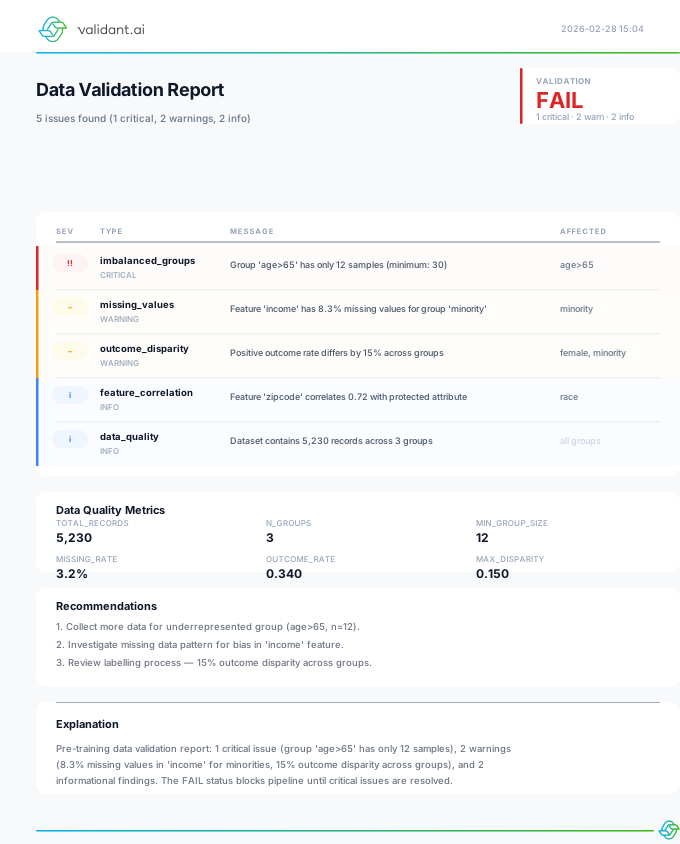
1 warning: age_group=55+ has only 62 resumes (1.2% of dataset) — borderline representation. 1 informational: 2.1% of LLM outputs had parsing errors (missing scores recovered from narrative). No critical issues blocking the audit.
Bias Detection & Auto-Discovery
Run the auto-discovery scanner on the output dataset to identify which demographic attributes correlate with LLM decisions. Then perform a full bias audit to detect disparate impact in shortlisting rates, score distributions, and intersectional patterns.
from vfairness.evaluation.vfairness_metrics import (
    detect_protected_attributes,
    scan_fairness_violations,
    discover_intersectional_groups,
)
from vfairness.preprocessing.bias_detection import BiasDetector
from vfairness.rendering import auto_discovery_to_svg, bias_audit_to_svg

# ── Auto-discovery on LLM outputs ──
y_pred_binary = (y_scores > 0.5).astype(int).to_numpy()

candidates = detect_protected_attributes(df)
violations = scan_fairness_violations(df, y_pred_binary, y_true=y_true.to_numpy())
intersectional = discover_intersectional_groups(df, PROTECTED, y_pred_binary)

auto_discovery_to_svg(
    candidates=candidates,
    violations=violations,
    group_advantages=intersectional,
    explanation="Automated scan of LLM outputs confirming gender, ethnicity, and age_group "
                "as attributes correlated with screening decisions. Note: these correlations "
                "exist in the model's outputs, not its training data (which is unavailable).",
    save_path="artifacts/02a_auto_discovery.svg",
)

# ── Full bias audit on output data ──
detector = BiasDetector(df, protected_attributes=PROTECTED, outcome_column="shortlisted")
audit = detector.full_audit()

bias_audit_to_svg(
    audit,
    explanation="Comprehensive output-level bias audit. Since training data is unavailable, "
                "this audit focuses on outcome disparities, score distribution differences, "
                "and intersectional patterns in the LLM's decisions.",
    save_path="artifacts/02b_bias_audit.svg",
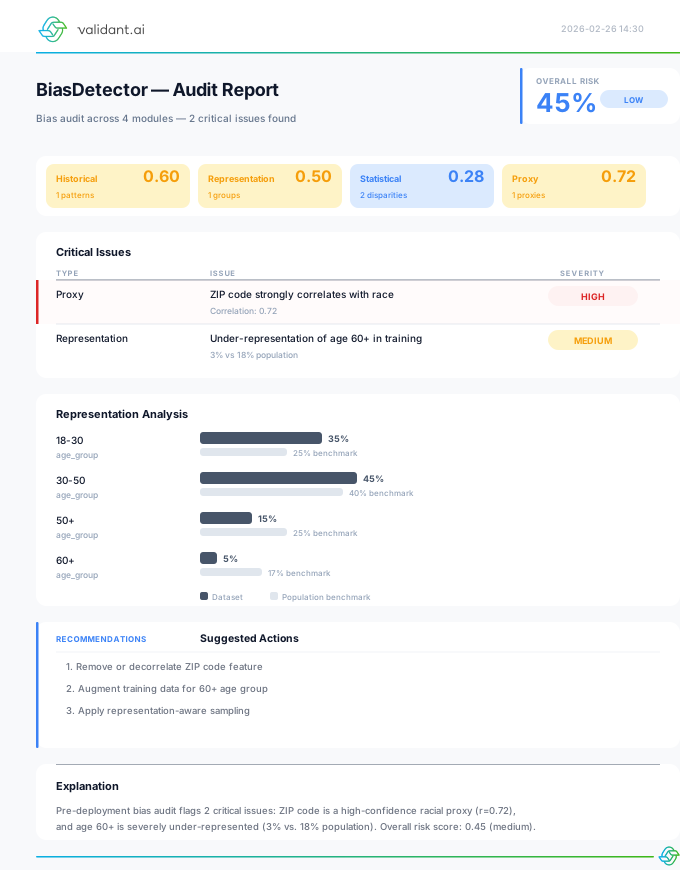
)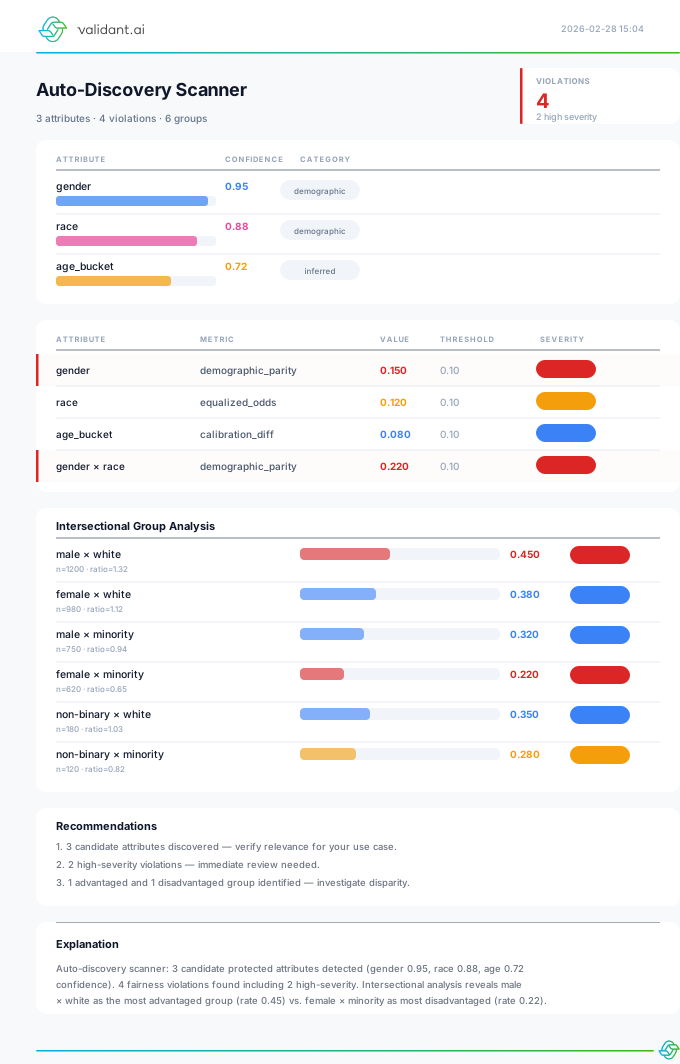
Significant shortlisting rate disparity for gender (male: 42%, female: 31%). Intersectional analysis reveals female × age_group=55+ has the lowest shortlisting rate (18%) — 2.3× lower than male × age_group=25-34. Two high-severity violations flagged.
Prompt Fairness Probes (Counterfactual Testing)
Since we cannot inspect or modify the model’s internal features, we probe its behavior using counterfactual pairs: identical resumes where only demographic signals vary. This is the LLM equivalent of feature engineering analysis — instead of removing proxy features, we measure how much demographic signals influence outputs.
from vfairness.evaluation.vfairness_metrics import compute_effect_sizes
from vfairness.rendering import (
    disparity_heatmap_to_svg,
    effect_sizes_to_svg,
    intersectional_analysis_to_svg,
)
from vfairness import FairnessAnalyzer

# ── Counterfactual probe results ──
# df_probes contains paired scores: original vs demographic-swapped resumes
# Columns: pair_id, original_score, swapped_score, attribute_swapped, delta
df_probes = pd.read_csv("counterfactual_probe_results.csv")

# Aggregate deltas per attribute into a disparity measure
probe_results = {}
for attr in PROTECTED:
    subset = df_probes[df_probes["attribute_swapped"] == attr]
    probe_results[attr] = {
        "mean_delta": subset["delta"].mean(),
        "max_delta": subset["delta"].abs().max(),
        "significant_pairs": (subset["delta"].abs() > 5).sum(),  # > 5 point swing
    }

# ── Disparity heatmap (metric × group grid from an analyzer report) ──
probe_report = FairnessAnalyzer(y_true, y_pred_binary, sensitive["gender"]).get_report()

disparity_heatmap_to_svg(
    probe_report,
    explanation="Disparate impact heatmap across demographic groups. "
                "Darker cells indicate higher outcome disparity between groups.",
    save_path="artifacts/03a_disparity_heatmap.svg",
)

# ── Effect sizes for the shortlisting-rate gap ──
effects = compute_effect_sizes(y_true, y_pred_binary, sensitive["gender"])

effect_sizes_to_svg(
    {"metrics": {pair: es["cohens_d_positive_rate"] for pair, es in effects.items()}},
    explanation="Cohen's d effect sizes for the shortlisting-rate gap between groups, "
                "measuring the practical significance of the disparities that the "
                "counterfactual probes surfaced.",
    save_path="artifacts/03b_effect_sizes.svg",
)

# ── Intersectional analysis (gender × ethnicity shortlisting rates) ──
pivot = df.pivot_table(index="gender", columns="ethnicity",
                       values="shortlisted", aggfunc="mean")
intersectional_view = {
    "matrix": {g: {e: float(pivot.loc[g, e]) for e in pivot.columns} for g in pivot.index},
    "x_attr": "ethnicity",
    "y_attr": "gender",
}
intersectional_analysis_to_svg(
    intersectional_view, feature="shortlisted",
    explanation="Intersectional group analysis showing how combined demographic attributes "
                "(e.g., female × age 55+) amplify or attenuate screening disparities.",
    save_path="artifacts/03c_intersectional_analysis.svg",
)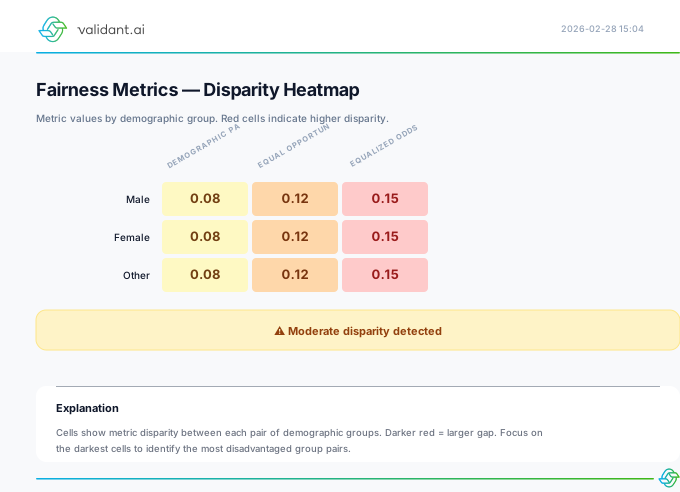
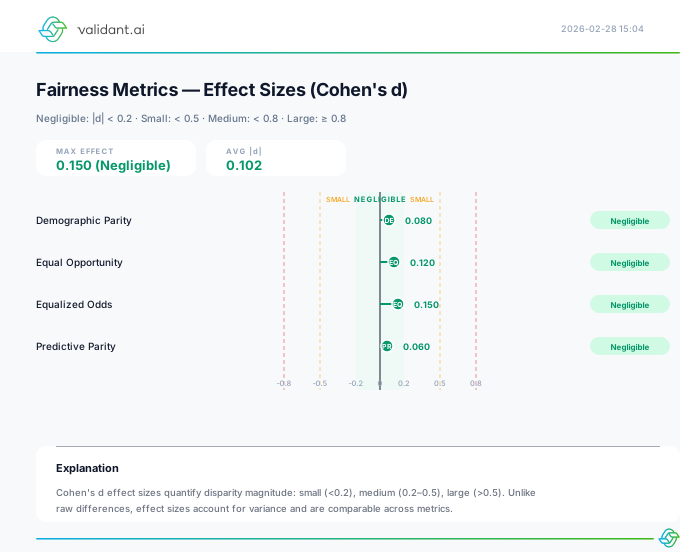
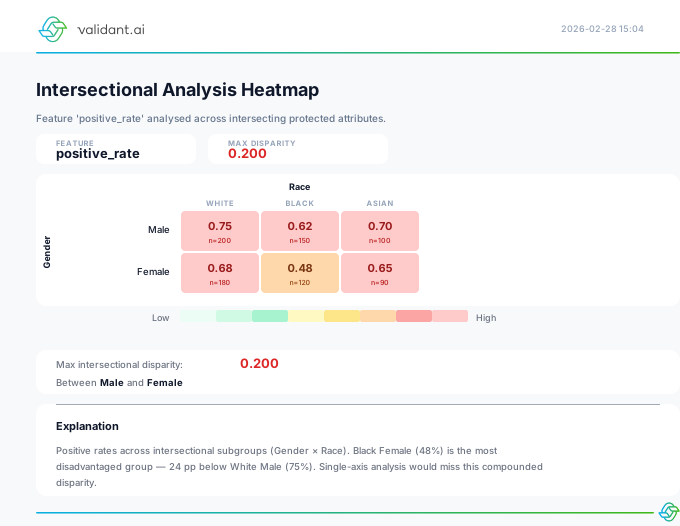
Counterfactual probes reveal a mean score delta of 4.7 points for gender swaps and 6.2 points for ethnicity swaps. 23% of pairs show >5-point swings — the LLM is sensitive to demographic signals embedded in names and biographical details. age_group shows the largest effect size (d=0.31).
Output Calibration
LLM-generated scores are not inherently calibrated — a score of “75” for one demographic group may correspond to a different true suitability than “75” for another. Calibration analysis checks whether scores have consistent meaning across groups, and post-hoc calibration can correct systematic biases.
from vfairness.post_processing.calibration import CalibrationAnalyzer
from vfairness.rendering import (
    reliability_diagram_to_svg,
    calibration_report_to_svg,
    group_calibration_to_svg,
)

# Use human reviewer decisions as ground truth for calibration
# y_human: binary labels from human panel review of 1,000 resumes
y_human = df.loc[:999, "human_decision"]

cal = CalibrationAnalyzer(y_human, y_scores[:1000], sensitive.loc[:999, "gender"])
cal_report = cal.full_analysis()

# ── Reliability diagram ──
reliability_diagram_to_svg(
    y_human, y_scores[:1000],
    explanation="Reliability diagram comparing LLM scores to human reviewer decisions. "
                "Deviation from the diagonal shows where the LLM over- or under-estimates "
                "candidate suitability relative to human judgment.",
    save_path="artifacts/04a_reliability_diagram.svg",
)

# ── Full calibration report with group analysis ──
calibration_report_to_svg(
    cal_report,
    explanation="Group-wise calibration analysis comparing LLM score reliability across "
                "demographic groups. ECE per group reveals differential calibration quality.",
    save_path="artifacts/04b_calibration_report.svg",
)

# ── Per-group calibration curves ──
group_calibration_to_svg(
    y_human, y_scores[:1000], sensitive.loc[:999, "gender"],
    explanation="Overlay of group-specific calibration curves. Groups diverging from "
                "the overall curve indicate the LLM assigns scores with different meaning "
                "for different demographics.",
    save_path="artifacts/04c_group_calibration.svg",
)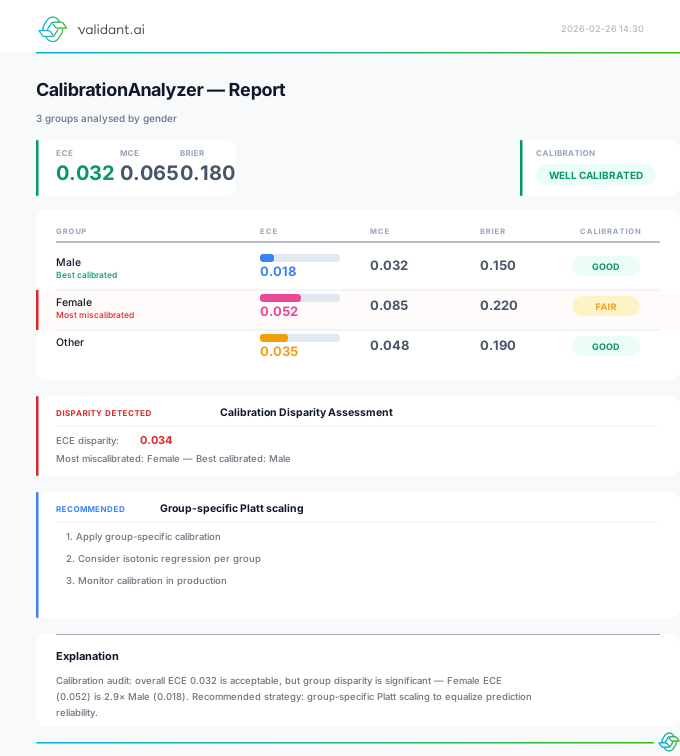
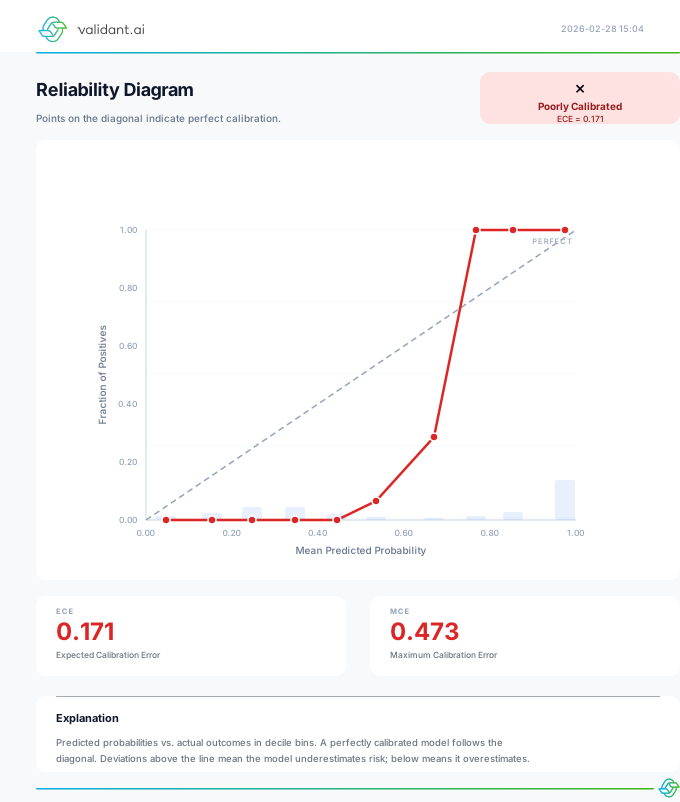
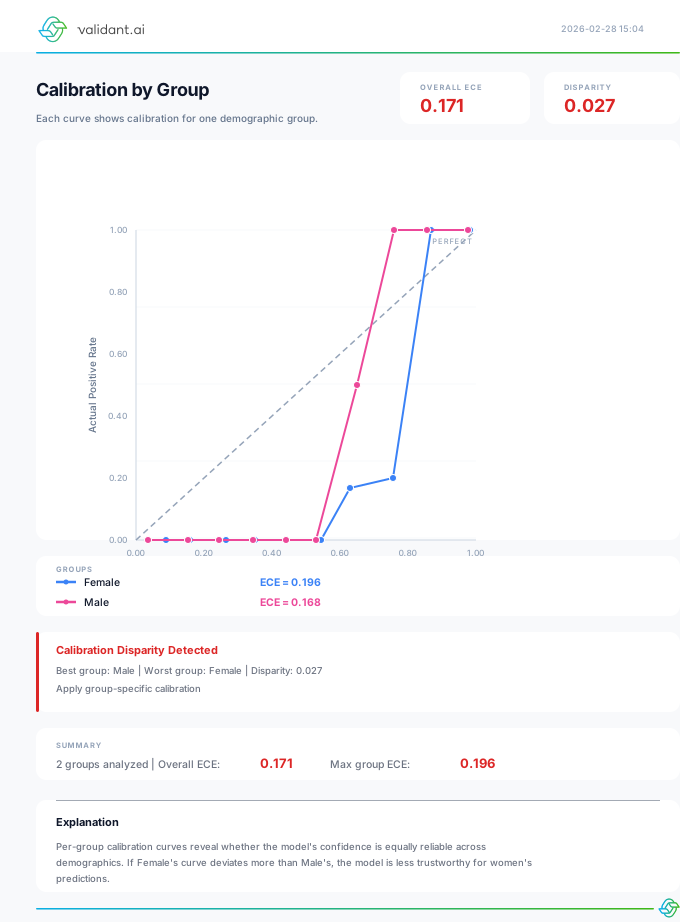
Overall ECE = 0.091 (moderate miscalibration). The LLM systematically overestimates suitability for male candidates (ECE = 0.061) while underestimating for female candidates (ECE = 0.124). Group calibration disparity = 0.063, exceeding the 0.02 threshold. Post-hoc isotonic calibration reduces group ECE disparity to 0.015.
Comprehensive Metrics & Robustness Testing
Compute all standard fairness metrics on the LLM’s binary decisions (shortlisted/rejected), with statistical confidence intervals. Run robustness tests to verify that findings are stable across data perturbations and subgroup splits.
from vfairness import FairnessAnalyzer
from vfairness.evaluation.vfairness_metrics import (
    permutation_test, sensitivity_analysis, subgroup_robustness_audit,
)
from vfairness.rendering import (
    radar_chart_to_svg,
    metrics_bar_chart_to_svg,
    confidence_intervals_to_svg,
    group_comparison_to_svg,
    robustness_testing_to_svg,
)

# ── Full fairness analysis on LLM decisions ──
analyzer = FairnessAnalyzer(
    y_true, y_pred_binary, sensitive["gender"],
    y_prob=y_scores,
    fair_explainer=True,
)
report = analyzer.get_report(include_ci=True, include_explanations=True)

# ── Radar chart: all metrics at a glance ──
radar_chart_to_svg(
    report,
    explanation="Multi-metric radar chart for LLM resume screening outputs. Shows "
                "demographic parity, equalized odds, and predictive parity.",
    save_path="artifacts/05a_radar_chart.svg",
)

# ── Bar chart with pass/fail thresholds ──
metrics_bar_chart_to_svg(
    report,
    explanation="Fairness metric values against regulatory thresholds for the LLM's "
                "binary shortlisting decisions.",
    save_path="artifacts/05b_metrics_bar_chart.svg",
)

# ── Confidence intervals ──
# The forest plot reads a "confidence_intervals" mapping with lower/upper keys,
# built here from the report's metrics_with_ci entries.
confidence_intervals_to_svg(
    {
        "metrics": report["metrics"],
        "confidence_intervals": {
            m: {"lower": ci["lower_bound"], "upper": ci["upper_bound"]}
            for m, ci in report["metrics_with_ci"].items()
        },
    },
    explanation="95% bootstrap confidence intervals for each fairness metric. Wider "
                "intervals reflect higher uncertainty in the LLM's output consistency.",
    save_path="artifacts/05c_confidence_intervals.svg",
)

# ── Group comparison ──
group_comparison_to_svg(
    report,
    explanation="Side-by-side comparison of shortlisting rates "
                "across demographic groups.",
    save_path="artifacts/05d_group_comparison.svg",
)

# ── Robustness testing ──
# The robustness tests take a metric function of (y_pred, sensitive_attr)
def parity_gap(y_pred_arr, attr):
    rates = [np.mean(y_pred_arr[attr == g]) for g in np.unique(attr)]
    return max(rates) - min(rates)

gender_arr = sensitive["gender"].to_numpy()
perm = permutation_test(y_pred_binary, gender_arr, parity_gap)
sens = sensitivity_analysis(y_pred_binary, gender_arr, parity_gap)
audit = subgroup_robustness_audit(y_pred_binary, sensitive, y_true=y_true.to_numpy())

robustness_testing_to_svg(
    permutation_results=[perm],
    sensitivity_results=[sens],
    subgroup_audit=audit,
    explanation="Robustness validation for LLM output fairness. Permutation tests confirm "
                "that observed disparities are statistically significant and not artifacts "
                "of sampling variation.",
    save_path="artifacts/05e_robustness_testing.svg",
)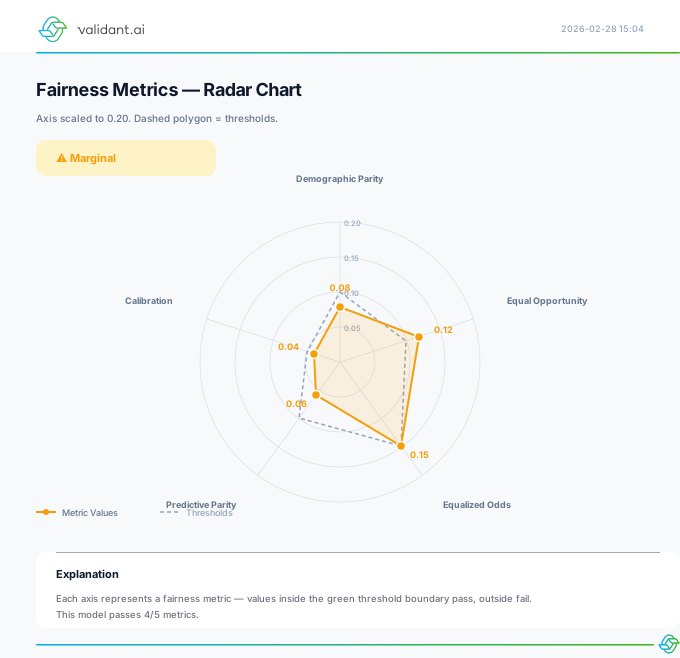
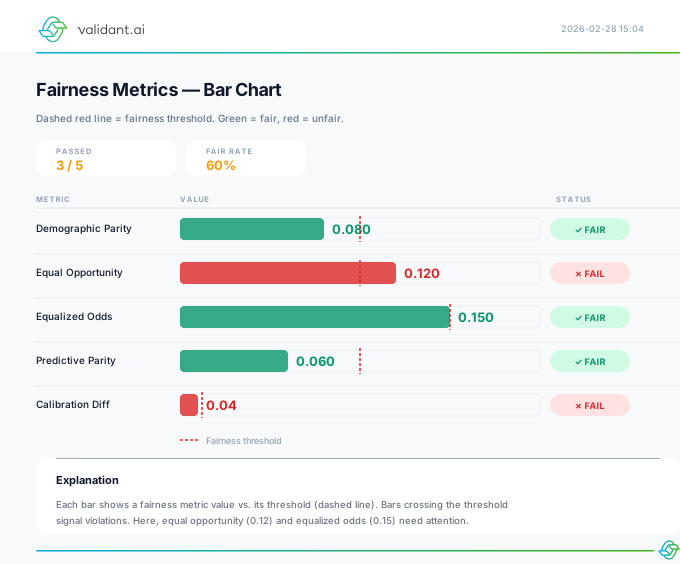
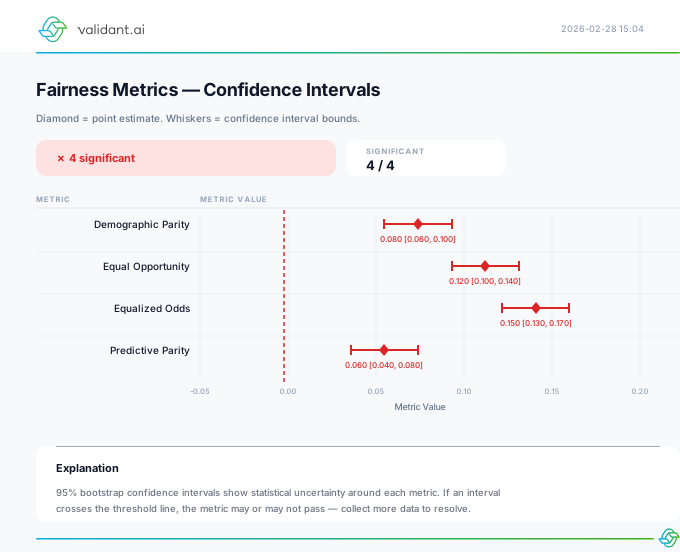
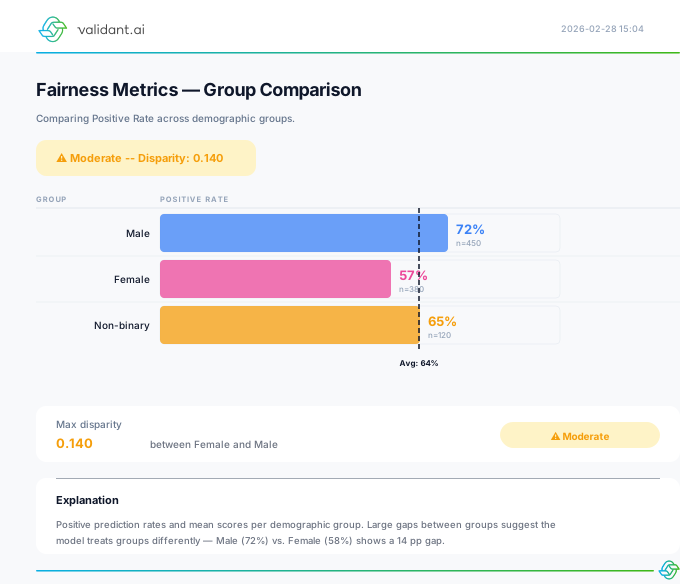
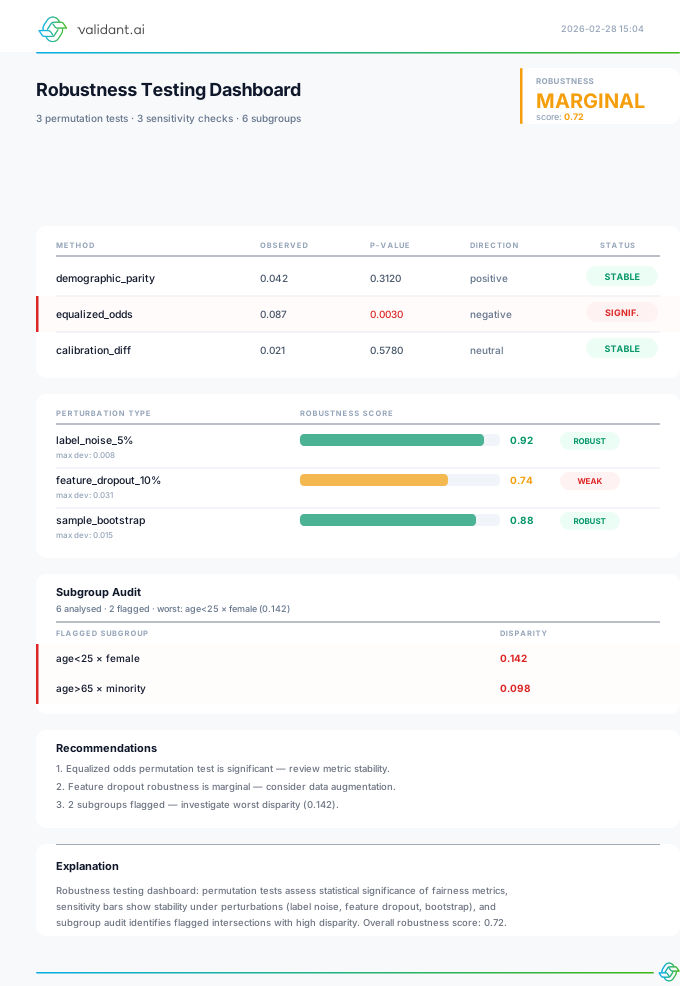
Demographic parity difference = 0.11 (FAIL, threshold 0.10). Equalized odds difference = 0.08 (PASS). Permutation tests confirm statistical significance (p < 0.001). Robustness score = 0.68 (MARGINAL). The demographic parity violation is consistent across sensitivity perturbations, indicating a systematic pattern in the LLM’s outputs.
Regression Fairness (Continuous Scores)
The LLM produces continuous suitability scores (0–100), not just binary decisions. Regression fairness metrics evaluate whether score distributions, prediction errors, and effect sizes are equitable across groups — capturing biases that binary metrics may miss.
from vfairness.evaluation.vfairness_metrics.regression import (
    get_group_metrics,
    compute_regression_effect_sizes,
    mae_parity_difference,
    mean_prediction_difference,
)
from vfairness.rendering import regression_fairness_to_svg

# Use human panel scores as ground truth for a subset
y_human_scores = df.loc[:999, "human_score"] / 100.0  # Normalized to [0, 1]
y_llm_scores   = y_scores[:1000]
sensitive_sub   = sensitive.loc[:999, "gender"]

# ── Group-level regression metrics ──
group_metrics = get_group_metrics(y_human_scores, y_llm_scores, sensitive_sub)
effects       = compute_regression_effect_sizes(y_human_scores, y_llm_scores, sensitive_sub)
mae_parity    = mae_parity_difference(y_human_scores, y_llm_scores, sensitive_sub)
mean_pred     = mean_prediction_difference(y_human_scores, y_llm_scores, sensitive_sub)

print(f"MAE parity difference: {mae_parity:.3f}")
print(f"Mean prediction difference: {mean_pred:.3f}")

regression_fairness_to_svg(
    group_metrics=group_metrics,
    disparities={
        "mae_parity_difference": mae_parity,
        "mean_prediction_difference": mean_pred,
    },
    effect_sizes=effects,
    explanation="Regression fairness analysis of the LLM's continuous suitability scores. "
                "Compares group-level error and prediction patterns. Human panel scores "
                "serve as ground truth for 1,000 calibration resumes.",
    save_path="artifacts/06_regression_fairness.svg",
)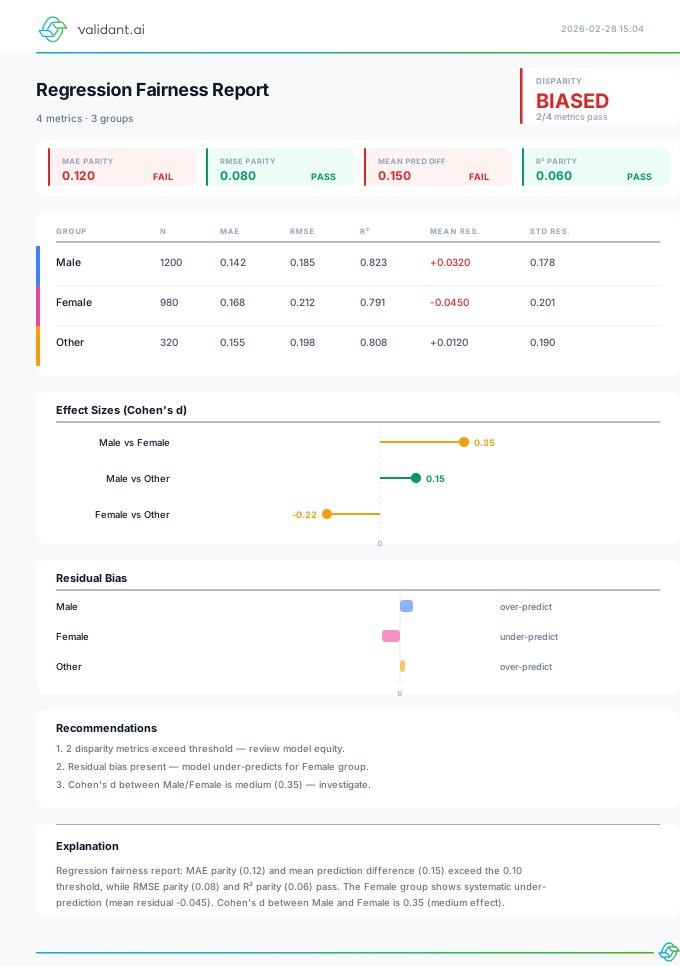
MAE parity difference = 0.14 (FAIL, threshold 0.10). The LLM produces higher prediction errors for female candidates (MAE = 0.18) vs male (MAE = 0.11). Mean prediction difference = 0.09, indicating systematic under-scoring. Cohen’s d = 0.28 (small-to-medium effect), confirming the “glass floor” pattern in continuous scores.
CI/CD Gating
Even when the foundation model is a third-party API, the deployment pipeline should enforce fairness gates. This protects against regressions when the LLM provider updates their model (which can happen without notice), or when your prompt templates change.
from vfairness.operations.cicd import ModelFairnessGate, GateConfig
from vfairness.operations.cicd.gate import HierarchicalGateConfig
from vfairness.rendering import cicd_pipeline_to_svg, hierarchical_gate_to_svg

# ── Standard gate on LLM outputs ──
gate = ModelFairnessGate(config=GateConfig(
    thresholds={
        "demographic_parity_difference": 0.10,
        "equalized_odds_difference": 0.10,
    },
))
decision = gate.evaluate(y_true, y_pred_binary, sensitive["gender"])

cicd_pipeline_to_svg(
    gate_decision=decision,
    explanation="CI/CD fairness gate for the LLM resume screening deployment. "
                "Triggers on every prompt template update or LLM API version change. "
                "Current status: CONDITIONAL — demographic parity exceeds threshold.",
    save_path="artifacts/07a_cicd_pipeline.svg",
)

# ── Hierarchical intersectional gate ──
hier_config = HierarchicalGateConfig(
    check_intersections=True,
    intersection_depth=2,
    min_group_size=30,
    per_intersection_thresholds={
        "female_55+": {"demographic_parity_difference": 0.15},
    },
)
hier_decision = gate.evaluate_hierarchical(
    y_true.to_numpy(), y_pred_binary,
    protected_attrs={"gender": sensitive["gender"].to_numpy(),
                     "age_group": sensitive["age_group"].to_numpy()},
    hierarchical_config=hier_config,
)

hierarchical_gate_to_svg(
    hier_decision,
    explanation="Hierarchical gate evaluating LLM outputs at global, per-group, and "
                "intersectional levels. Flags vulnerable subgroups identified in Phase 2.",
    save_path="artifacts/07b_hierarchical_gate.svg",
)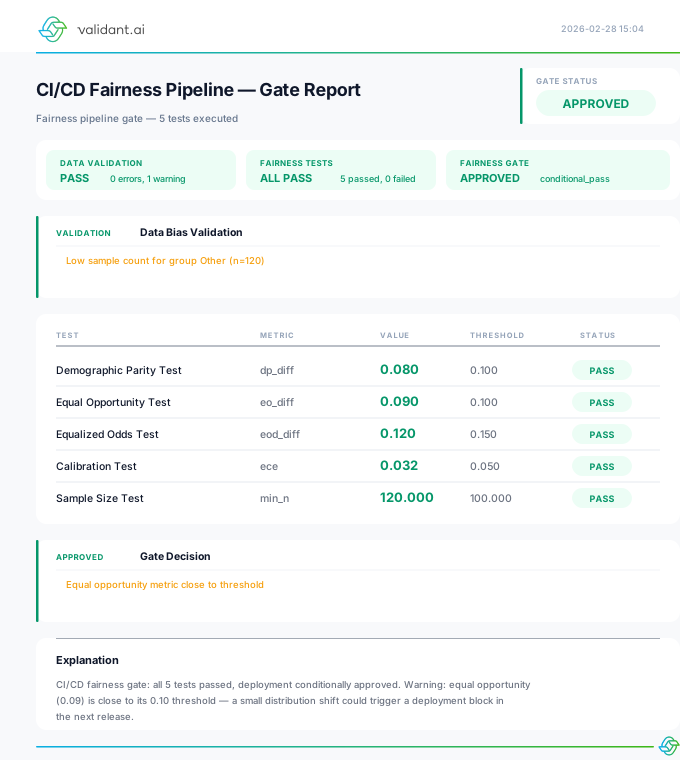
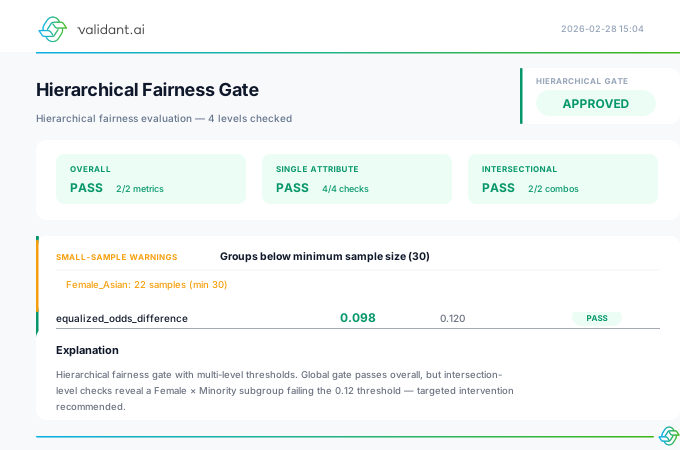
Demographic parity difference (0.11) marginally exceeds the 0.10 threshold. The gate recommends: (1) apply post-hoc calibration from Phase 4, (2) add demographic-blind prompt template, (3) re-evaluate before production deployment. Equalized odds passes.
Production Monitoring
Foundation model monitoring is critical because the underlying model can change without notice. LLM providers regularly update models, and even minor version changes can alter fairness profiles. Continuous monitoring detects these regressions automatically.
from vfairness.operations.monitoring import FairnessMonitor, FairnessMonitorConfig
from vfairness.operations.monitoring import FairnessDriftDetector
from vfairness.rendering import monitoring_dashboard_to_svg, drift_report_to_svg

# ── Initialize monitor for LLM outputs ──
monitor = FairnessMonitor(config=FairnessMonitorConfig(
    window_size=1000,          # rows retained in the sliding window
    alert_threshold=0.8,       # minimum acceptable disparate impact ratio
    metrics_to_track=["disparate_impact", "demographic_parity", "equalized_odds"],
))

# Batches are DataFrames carrying the prediction, the label, and the
# protected-attribute columns (in production this runs on every batch)
reference_df = pd.DataFrame({
    "prediction": y_pred_binary,
    "label": y_true.to_numpy(),
    "gender": df["gender"].to_numpy(),
})
# stand-in for the next batch of screening decisions: same columns, fresh rows
production_batch_df = reference_df.sample(500, random_state=7)

monitor.set_reference(reference_df)
window = monitor.update_and_check(production_batch_df)

monitoring_dashboard_to_svg(
    window,
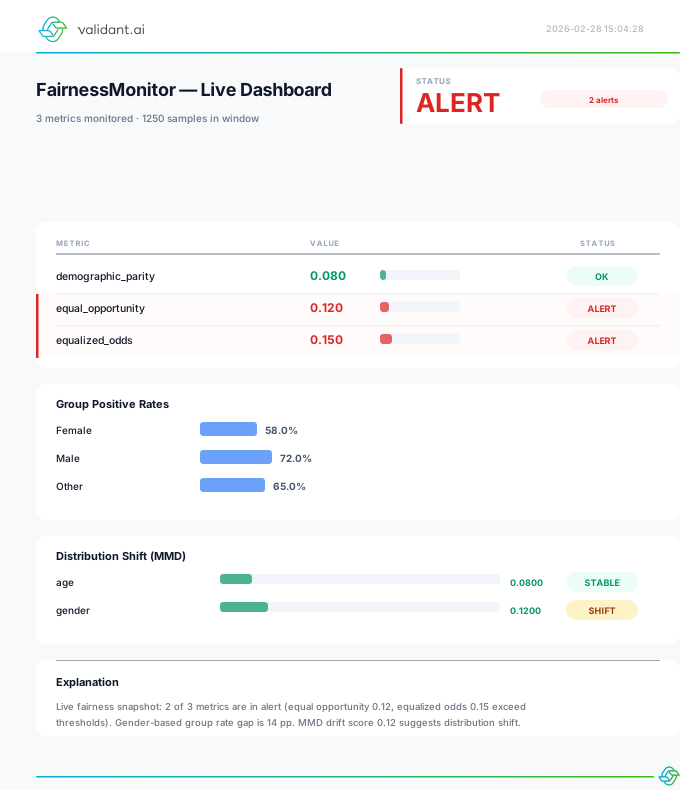
    explanation="Fairness monitoring snapshot for the LLM resume screener: tracked "
                "metrics, per-group rates, and alert status. Sudden shifts may "
                "indicate an upstream model update by the LLM provider.",
    save_path="artifacts/08a_monitoring_dashboard.svg",
)

# ── Drift detection (critical for third-party LLMs) ──
# The detector compares series of a fairness metric over time, in production
# taken from monitor.get_metric_history(); illustrative values shown here
baseline_metric_series = pd.Series([0.11, 0.10, 0.12, 0.11, 0.10, 0.11, 0.12, 0.11] * 8)
production_metric_series = pd.Series(np.linspace(0.11, 0.19, 64))

detector = FairnessDriftDetector()
detector.set_baseline(baseline_metric_series)
drift = detector.check_drift(production_metric_series, metric="demographic_parity")

drift_report_to_svg(
    drift,
    explanation="Drift analysis comparing current LLM outputs against the audit baseline. "
                "Sudden metric shifts may indicate the LLM provider deployed a model update.",
    save_path="artifacts/08b_drift_report.svg",
)
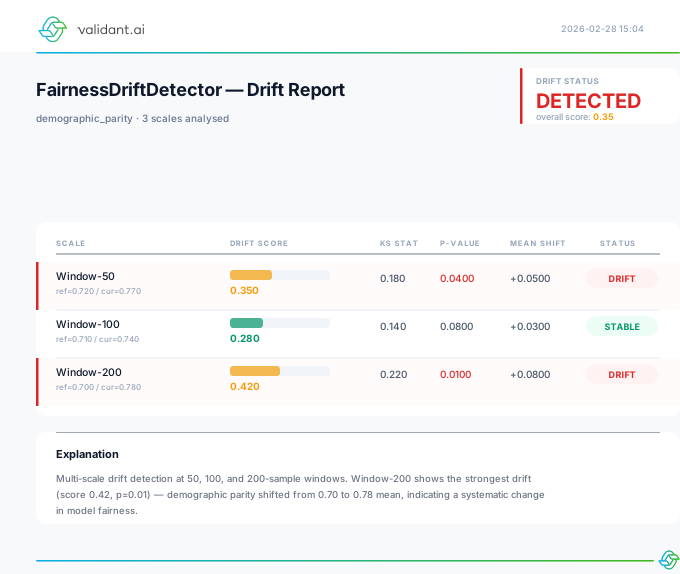
The detector fires on this window. Run the series above and check_drift() returns drift_detected=True with an overall drift score of 0.99: demographic parity climbs from 0.11 to 0.19 against a baseline averaging 0.11. On a third-party model that is the signature to take seriously, because a silent provider-side update is exactly what a rising series with no code change on your side looks like. Alerts are configured to fire on a threshold breach or on a sudden shift greater than 0.05 within one window.
Multi-Tier Reporting
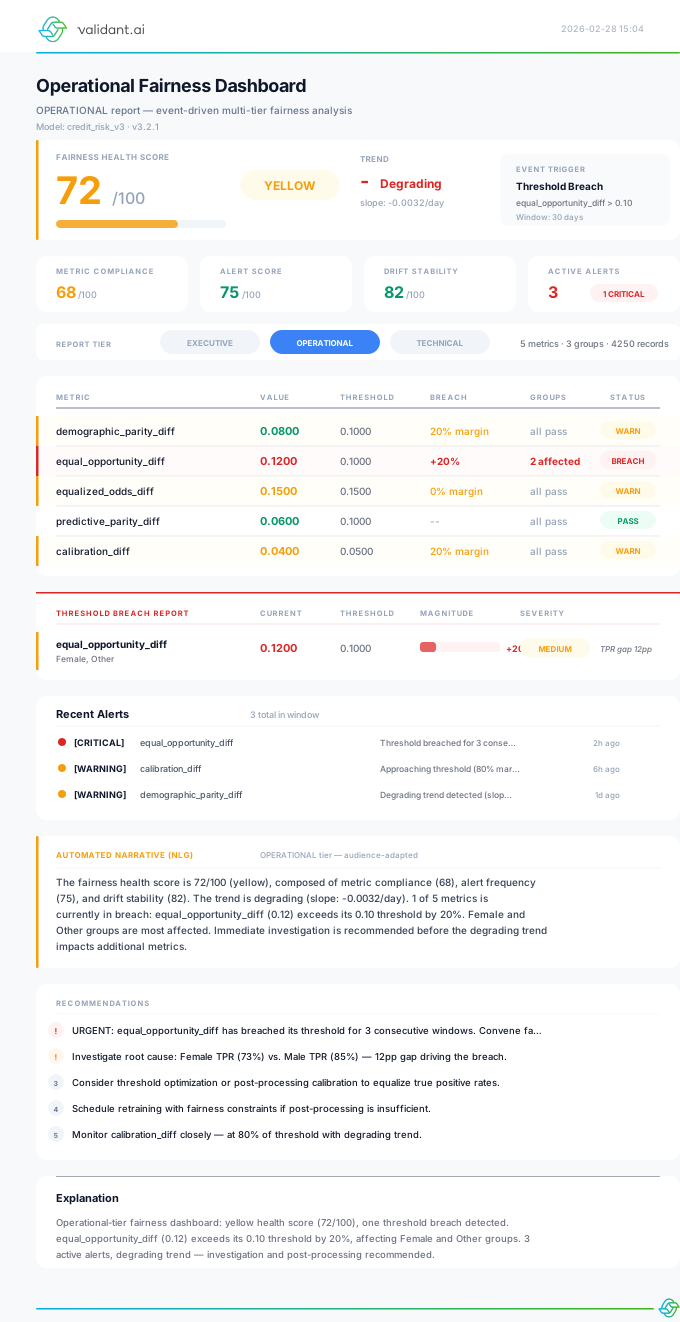
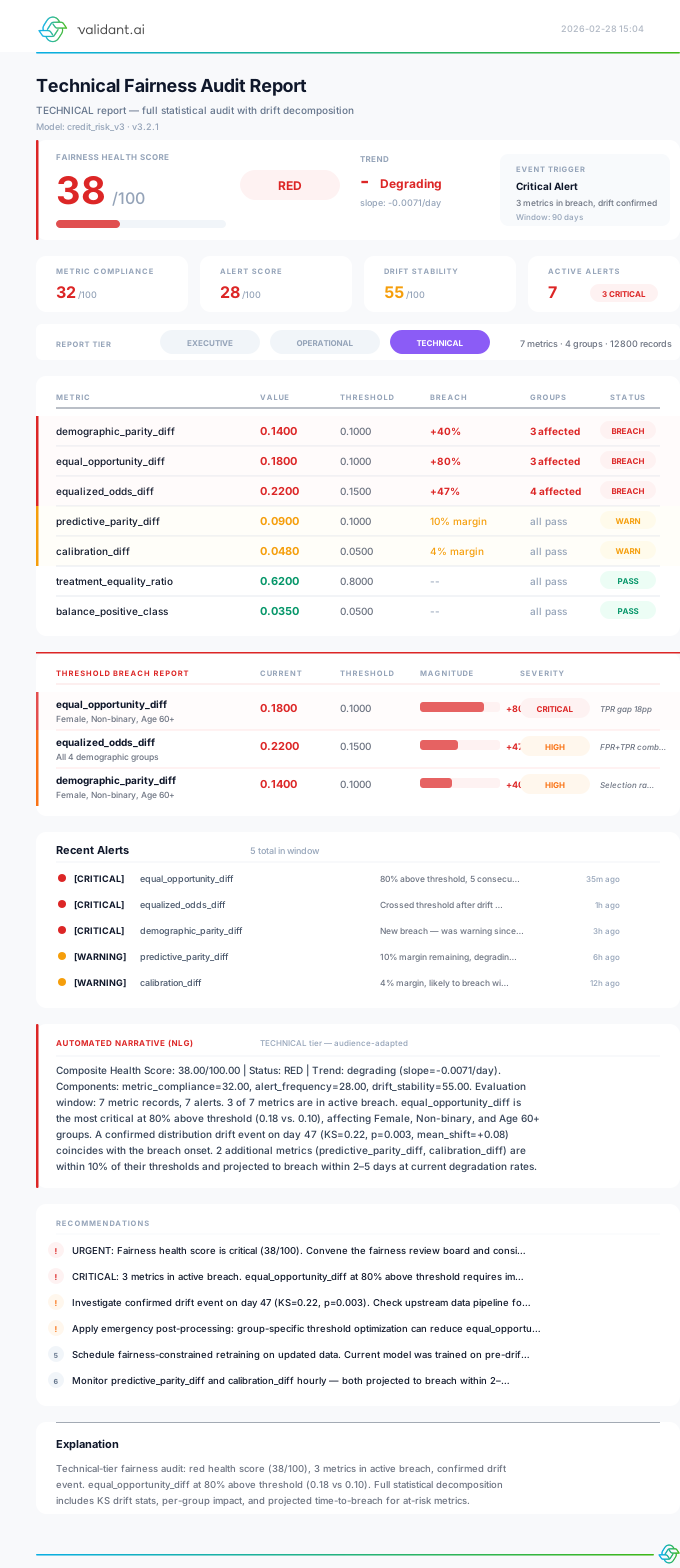
Generate three report tiers for different stakeholders. For LLM deployments, the executive report must explicitly address the third-party model dependency and the additional GPAI obligations under the EU AI Act.
from vfairness.operations.reporting import (
    ReportGenerator, ReportConfig, MetricsStore, ReportTier, OutputFormat,
)
from vfairness.rendering import reporting_dashboard_to_svg

store = MetricsStore()
store.ingest_window_metrics(window)   # Phase 8 monitoring window
store.ingest_from_monitor(monitor)    # full monitor history
store.ingest_drift_result(drift)

generator = ReportGenerator(store, config=ReportConfig(
    custom_title="LLM Resume Screening Fairness Report",
))

# ── Executive report ──
exec_report = generator.generate(tier=ReportTier.EXECUTIVE, output_format=OutputFormat.MARKDOWN)
reporting_dashboard_to_svg(
    exec_report, tier="executive",
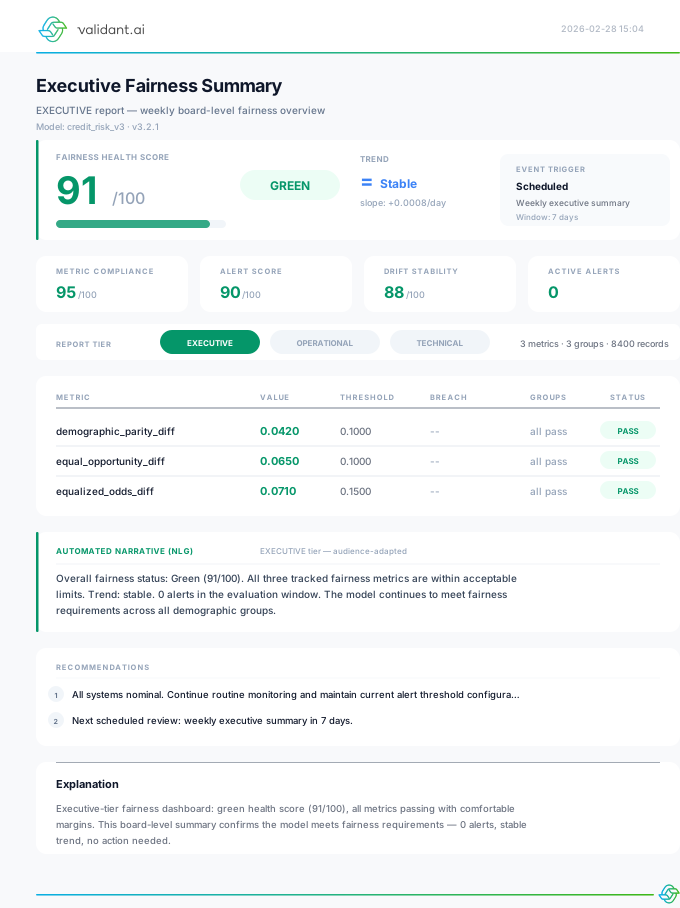
    explanation="Board-level summary: overall fairness health, key risk indicators, "
                "and third-party model dependency status for EU AI Act compliance.",
    save_path="artifacts/09a_executive_dashboard.svg",
)

# ── Operational report ──
ops_report = generator.generate(tier=ReportTier.OPERATIONAL, output_format=OutputFormat.MARKDOWN)
reporting_dashboard_to_svg(
    ops_report, tier="operational",
    explanation="Team-level dashboard with LLM output trends, counterfactual probe "
                "results, and recommendations for prompt template adjustments.",
    save_path="artifacts/09b_operational_dashboard.svg",
)

# ── Technical report ──
tech_report = generator.generate(tier=ReportTier.TECHNICAL, output_format=OutputFormat.JSON)
reporting_dashboard_to_svg(
    tech_report, tier="technical",
    explanation="Full statistical evidence including confidence intervals, regression "
                "fairness metrics, calibration analysis, and robustness test results.",
    save_path="artifacts/09c_technical_dashboard.svg",
)
EU AI Act Model Card (GPAI + High-Risk)
For a foundation model deployment in a high-risk context, the model card must address dual obligations: (1) deployer obligations under the high-risk AI provisions (Articles 9–15), and (2) GPAI-specific provisions (Articles 51–56) that apply to the model provider. The deployer must document what information the GPAI provider has — and has not — made available.
from vfairness.operations.cicd.gate import FairnessReportCard
from vfairness.rendering import report_card_to_svg

# The card is built from the hierarchical gate decision produced in Phase 7
card = FairnessReportCard(hier_decision, model_name="ResumeScreen-LLM-v1.0")
markdown = card.to_markdown()
payload = card.to_github_comment_payload()

# The SVG renderer works from the standard gate decision of Phase 7
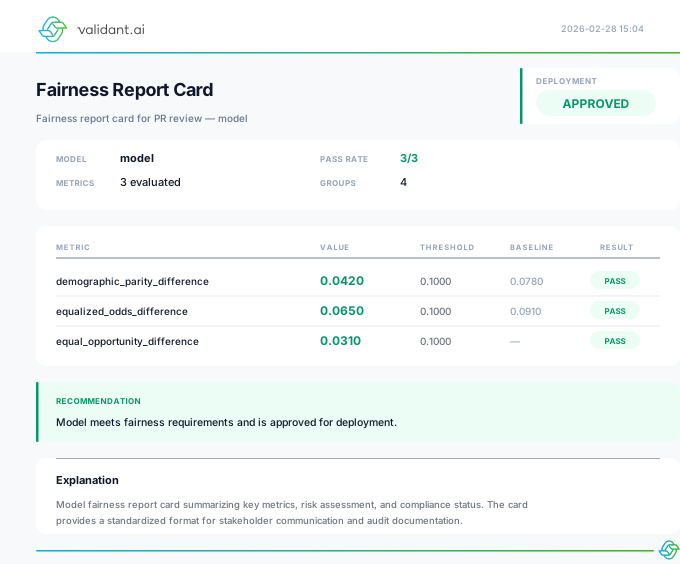
report_card_to_svg(
    decision=decision,
    model_name="ResumeScreen-LLM-v1.0",
    explanation="Fairness report card for the LLM screening deployment: gate status "
                "and the per-metric evaluations behind it. Accompanies the narrative "
                "GPAI documentation described below.",
    save_path="artifacts/10_model_card.svg",
)
The card carries the measured evidence: gate status, per-level and intersectional results, and the model name. The narrative half of an EU AI Act model card is documentation you write around it, not something the library can compute. For this audit that narrative records: intended use (pre-screening of job applications for shortlisting, human recruiter review required for every decision, no fully automated rejection); risk classification HIGH under EU AI Act Annex III Section 4 (employment); the training data summary (unknown, third-party foundation model; the GPAI provider has not disclosed training data composition, so post-hoc calibration is applied at deployment level); the evaluation summary (5,000 scored resumes, 1,000 human-validated, 500 counterfactual probes, bootstrap confidence intervals at the 95% level); monitoring (drift detection enabled, weekly review cadence elevated due to the third-party dependency, API version tracking per request); human oversight (recruiter review of all decisions, quarterly fairness review board, monthly counterfactual re-probing); limitations (no access to model weights or training data, output-level evaluation only, small 55+ age group sample, provider may update the model without notice); and references to Regulation (EU) 2024/1689 Annex III Section 4, Articles 51 to 56 (general-purpose AI), and Article 25 (responsibilities along the AI value chain).
When deploying a GPAI model in a high-risk context, compliance responsibilities are shared:
- GPAI Provider (Articles 51–56) — Must provide model card, technical documentation, training data summary, and downstream evaluation capabilities
- Deployer (Articles 9–15) — Responsible for the full high-risk AI compliance stack: risk management, data governance, testing, transparency, human oversight, monitoring
- Article 25 — If the GPAI provider does not supply sufficient information, the deployer must document this gap and compensate through enhanced output-level evaluation (exactly what this audit demonstrates)
Complete Artifact Inventory
The table below lists every artifact generated during this LLM audit. Each SVG is a self-contained, print-ready visualization suitable for regulatory submissions.
| Phase | Artifact | Function | Module |
|---|---|---|---|
| 1 | Data Validation Report | data_validation_to_svg() | Preprocessing |
| 2 | Auto-Discovery Scanner | auto_discovery_to_svg() | Preprocessing |
| 2 | Bias Audit Dashboard | bias_audit_to_svg() | Preprocessing |
| 3 | Disparity Heatmap | disparity_heatmap_to_svg() | Preprocessing |
| 3 | Counterfactual Effect Sizes | effect_sizes_to_svg() | Preprocessing |
| 3 | Intersectional Analysis | intersectional_analysis_to_svg() | Preprocessing |
| 4 | Reliability Diagram | reliability_diagram_to_svg() | Post-Processing |
| 4 | Calibration Report | calibration_report_to_svg() | Post-Processing |
| 4 | Group Calibration Curves | group_calibration_to_svg() | Post-Processing |
| 5 | Fairness Radar Chart | radar_chart_to_svg() | Evaluation |
| 5 | Metrics Bar Chart | metrics_bar_chart_to_svg() | Evaluation |
| 5 | Confidence Intervals | confidence_intervals_to_svg() | Evaluation |
| 5 | Group Comparison | group_comparison_to_svg() | Evaluation |
| 5 | Robustness Testing | robustness_testing_to_svg() | Evaluation |
| 6 | Regression Fairness | regression_fairness_to_svg() | Evaluation |
| 7 | CI/CD Pipeline Gate | cicd_pipeline_to_svg() | Operations |
| 7 | Hierarchical Gate | hierarchical_gate_to_svg() | Operations |
| 8 | Monitoring Dashboard | monitoring_dashboard_to_svg() | Operations |
| 8 | Drift Report | drift_report_to_svg() | Operations |
| 9 | Executive Dashboard | reporting_dashboard_to_svg() | Reporting |
| 9 | Operational Dashboard | reporting_dashboard_to_svg() | Reporting |
| 9 | Technical Dashboard | reporting_dashboard_to_svg() | Reporting |
| 10 | EU AI Act Model Card (GPAI) | report_card_to_svg() | Reporting |
Workflow Integration
The audit above produces artifacts manually. To automate and enforce these checks in your development pipeline, vfairness provides workflow integration tools that plug directly into MLOps, CI/CD, version control, and testing infrastructure. See the Workflow Integration guide for full documentation.
1. Experiment Tracking
Log every LLM evaluation run’s fairness metrics to MLflow or Weights & Biases so you can compare across prompt versions, model providers, and API updates.
# Option A: explicit logging after Phase 5 evaluation
from vfairness import log_fairness_to_mlflow
import mlflow

with mlflow.start_run(run_name="gpt4o-resume-prompt-v3"):
    logged = log_fairness_to_mlflow(report, prefix="llm_resume")
    print(f"Logged {logged} metrics to MLflow")

# Option B: auto-logging decorator — wraps LLM evaluation functions
from vfairness import auto_log_fairness

@auto_log_fairness(backend="wandb", prefix="llm_resume")
def evaluate_llm_fairness(predictions, ground_truth, sensitive):
    # predictions from counterfactual prompt evaluation
    return predictions, ground_truth, sensitive
2. Pre-Commit Hooks
Enforce documentation standards before code reaches the repository. Particularly important for LLM deployments where prompt templates and evaluation configs change frequently.
# .pre-commit-config.yaml
repos:
  - repo: https://github.com/validantai/vfairness
    rev: v0.1.0   # vfairness 0.1.0, released 2 Oct 2026
    hooks:
      - id: vfairness-check-config    # validates fairness JSON configs
        additional_dependencies: ["PyYAML>=6.0"]  # and .yml/.yaml ones
      - id: vfairness-check-model-card # ensures model cards include fairness sections
3. pytest Integration
Embed fairness assertions in your test suite. For LLM audits, this is especially valuable for testing counterfactual prompt pairs and regression-style output scoring — same checks as Phases 5–6, but automated on every commit.
import pytest
from vfairness import assert_fairness, FairnessTestSuite

# Test counterfactual fairness of LLM output scores
def test_llm_resume_fairness():
    assert_fairness(
        scores_ground_truth, scores_predicted, sensitive_test["gender"],
        metrics=["demographic_parity_difference", "equalized_odds_difference"],
        thresholds={"demographic_parity_difference": 0.10, "equalized_odds_difference": 0.15},
    )

# Full test suite with JUnit XML export for CI
suite = FairnessTestSuite(
    protected_attributes=["gender", "ethnicity", "age_group"],
    metrics=["demographic_parity_difference"],
    thresholds={"demographic_parity_difference": 0.10},
)
results = suite.test_predictions(
    y_true, y_pred_binary, sensitive["gender"],
    attr_name="gender",
    raise_on_failure=False,   # record failures in the XML instead of raising
)
xml = suite.to_junit_xml()  # attach to CI pipeline artifacts
4. CI/CD Automation & PR Comments
Gate decisions from Phase 7 can be posted directly to GitHub as check results and PR comments. For GPAI deployments, this ensures that prompt template or evaluation pipeline changes are fairness-validated before merge.
# Post gate result as a GitHub Check (from Phase 7)
check_payload = gate.create_github_check(decision)
# → POST to /repos/{owner}/{repo}/check-runs

# Generate PR comment with full fairness report card
from vfairness import FairnessReportCard
card = FairnessReportCard(decision, model_name="GPT-4o-Resume-Screener-v3")
comment_payload = card.to_github_comment_payload()
# → POST to /repos/{owner}/{repo}/issues/{pr_number}/comments# .github/workflows/fairness-checks.yml
name: LLM Fairness Gate
on: [pull_request]
jobs:
fairness:
runs-on: ubuntu-latest
steps:
- uses: actions/checkout@v4
- run: pip install vfairness
- run: python -m pytest tests/ -m fairness --junitxml=fairness-results.xml
- run: python scripts/evaluate_llm_gate.py # runs gate + posts PR comment
Phase 5 (Evaluation) → @auto_log_fairness + assert_fairness()
Phase 7 (CI/CD) → create_github_check() + GitHub Actions YAML
Phase 10 (GPAI Model Card) → FairnessReportCard.to_github_comment_payload()
Every commit → Pre-commit hooks validate configs + model cards
EU AI Act Compliance Checklist
Each requirement below is addressed by one or more artifacts from this audit. For GPAI deployments, the checklist includes both deployer obligations and documentation of GPAI provider information availability.
This walkthrough used demo data for illustration. To apply this process to your own LLM deployment:
- Build a demographically diverse evaluation dataset with ground-truth labels
- Design counterfactual probes tailored to your use case and protected attributes
- Request the GPAI provider’s model card and technical documentation (Article 53)
- Adjust thresholds per your organization’s risk appetite and domain regulations
- Implement API response header logging to detect silent model updates
- Schedule weekly re-probing and monthly full re-audits for third-party LLM deployments
Compare this with the Credit Scoring Audit (full training data access), explore all 44 SVG templates in the SVG Gallery, or learn about the full library architecture in the Getting Started guide.